
Building The “Single Source of Truth” in Sports: Kenneth Berkleef on Data, Discipline and Long-Term Value Creation
Updated: Apr 11
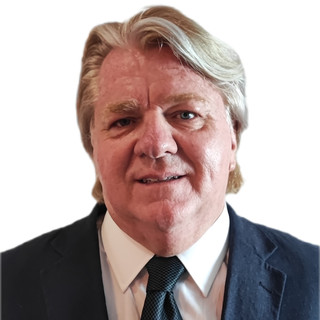
Founder of International Sports Group Kenneth Berkleef is building an integrated sports technology ecosystem, combining performance data, operational intelligence and a clear path to investor returns.
Kenneth Berkleef was born in Moengo, Suriname, and moved to the Netherlands as a child. Later, he studied law at the University of Amsterdam. Berkleef worked as a tax inspector for the Ministry of Finance and then started his own tax consultancy. As a Business Development Manager, he specialised in finance, legal advisory, marketing, and IT. He leveraged his knowledge and network to serve as a Founder and Investor at organisations such as the International Sports Group (ISG) and the Dutch Sport Tech Fund.

In professional sports, decisions have historically been driven by experience, instinct and fragmented information. A new reality is now challenging that model: data is no longer supportive; it is foundational.
Through ISG and its core platform, Iterpro, Berkleef is building what he describes as a “single source of truth” for sports organisations, a system where all relevant information is centralised, structured and actionable.
For investors, the proposition is equally structured: a technology-led ecosystem in a growing market, with a defined exit horizon of 3–5 years and a targeted return of approximately 7X times the initial investment. The global sports technology market is projected to reach approximately $68 billion by 2030, according to MarketsandMarkets.
But the foundations of that vision were shaped long before ISG existed.
What shaped you growing up, and how did it influence your entrepreneurial mindset?I grew up in very poor surroundings as the fourth child in a family of seven, and from a young age, I understood that nothing in life is handed to you. My first job at eight years old, helping a milkman in harsh conditions for very little reward, taught me discipline and resilience. Later, working in retail exposed me to the fundamentals of business early on. I learned that value is created at the moment of purchase, not at the moment of sale, a lesson that has stayed with me ever since.
Was there a defining moment when you knew you wanted to build something of your own? Yes, in my early twenties, I created a hip jacket that consisted of old leather coats and worn-out blue jeans. I had a top DJ at Music Television (MTV) wear the jacket, and it became quite a hit in the Netherlands. After producing and selling a large number of these self-made jackets to retail stores, I realized that creating something from nothing and convincing others of its value gave me real energy. That was the moment I knew I didn’t want to support someone else’s vision; I wanted to build my own.
What role did sport play in your life before it became your business focus?Sport has always been part of my life, although never in a professional sense. I’ve always been active in various sports like Karate, Football, Volleyball, Basketball, Tennis, Golf, Snowboarding and Salsa dancing. I was consistently above average, but never exceptional, which meant I had to rely on discipline rather than talent, develop real self-awareness, and understand what competition truly demands.
Who were your early inspirations inside or outside the sports world?In sports, I had the privilege to work with Johan Cruijff for several years. He had a profound impact on me, not just because of his footballing genius, but because of the way he thought. He had a unique ability to strip complexity down to its essence. That focus on simplicity is something I still value deeply. Outside the sportsworld one of my biggest influences came from literature, Karakter by Ferdinand Bordewijk. The novel tells the story of a young man who endures a relentless struggle against his harsh father and his own limitations. Its raw intensity and psychological depth make it a powerful exploration of perseverance, discipline, and the forging of character. It reshaped my view on ambition and struggle and ultimately led me to study law.
Looking back, what personal trait helped you most in your early career?A combination of self-belief, persistence, and a strong sense of integrity. You need to believe in your own direction, especially when others don’t yet see it, and you need to keep moving forward without compromising your principles.
How did the idea for International Sports Group first come to life?The idea came from a very practical observation. While advising within a professional football environment, I saw that critical information about players was stored in handwritten notes, locked away in a cupboard. If access was lost, the knowledge was lost. That made no sense to me. It became clear that the sports industry was operating without proper digital infrastructure, and that realization formed the foundation of what we are building today.
What problem in the sports industry were you determined to solve?At its core, the problem is fragmentation. The most valuable asset, the player, generates a vast amount of information, such as training, match, GPS, and heart-monitoring data, that was not centrally collected, structured, or utilized. Without that, decision-making is based on gut feelings and remains incomplete. Creating a single, reliable source of truth for all relevant information became my mission.
What were the biggest risks you took in the early days? The biggest risk was building something that simply didn’t exist yet. There was no blueprint, no comparable system globally. That meant my team and I were not just building a product; we needed to educate the market at the same time, which is always a difficult and uncertain path.
Can you describe a moment when you thought it might not work? Interestingly, the opposite happened. When I presented the idea to Frank Rijkaard, Johan Cruijff, and Guus Hiddink, some of the most respected figures in football, they immediately understood and supported it. It confirmed that the problem was real and the solution was relevant. That gave me confidence rather than doubt.

What kept you going during those uncertain phases? I had to rely on conviction, but not blind conviction. It’s about validating assumptions, understanding the market, and being honest about whether I could truly solve a problem. If that foundation is solid, then persistence becomes a rational choice, not just an emotional one.
What was your strategy in building ISG as a group rather than a single product company? From the beginning, I saw more value in building an ecosystem rather than a single product. By structuring the business as a group, we can combine a strong core technology with complementary solutions through acquisitions. That allows us to scale faster, reduce development time, and continuously strengthen the overall offering.
How do you decide which companies or technologies to bring into your ecosystem? The decision is always grounded in both strategy and economics. Does it strengthen our core technology? Does it improve our market position? Does it help to create a better product for the user? Does it bring immediate or future financial value? And just as importantly, does it deepen our relationships within the sports ecosystem?
What makes a sports tech company “worth investing in” for you? It starts with people. Investments are made in people who develop the product and manage the company. What is their background? Have they proved to be resilient? What is their outlook on the market and the business? Then, a simple question follows: What real problem are you solving? From there, I look at financial sustainability, the quality of the product, and how it integrates into a broader ecosystem. A good company doesn’t exist in isolation; it creates synergy.
How do you balance innovation with financial discipline? By staying focused on necessity rather than novelty. It’s easy to build things that are interesting but not essential. The discipline lies in continuously asking whether the market truly needs what you are building and whether it is willing to pay for it.
What has been your most difficult leadership decision so far? Trusting the wrong partner and having to acknowledge that reality. At some point, I had to accept that a situation was not what I believed it to be, and I had to act decisively. That required both clarity and toughness.
What’s one trend in sports tech people are underestimating? The industry still underestimates the power of fully integrated systems. With relatively limited investment, clubs can dramatically increase their level of insight and control. Too many organisations still rely on fragmented tools, while a single integrated platform gives you a complete overview of everything that matters, and ultimately allows you to steer your organisation in a much more effective way.
What attracted you specifically to Iterpro?
Iterpro has created a one-stop solution for sports. It combines various software models into one integrated solution: a single point of truth. Iterpro stood out because of both its technology and its philosophy. It is built with state-of-the-art architecture, but just as importantly, it is designed with the user in mind, almost like a game in terms of interface and usability.
The combination of a SaaS model, role-based applications, and unique features such as the Player App, a dedicated Directors App with financial capabilities, an integrated payment solution platform, and an AI layer on top of the application makes it fundamentally different from anything else in the market.
How does Iterpro fit into your broader vision for ISG? Iterpro is not just part of the vision; it is the foundation. Everything we build within ISG is designed to strengthen, expand, or complement that core platform.
What does a fully integrated sports organisation look like in your eyes? A truly integrated organisation is one where all departments operate within the same system and speak the same language. Information flows seamlessly, collaboration becomes natural, and decisions are no longer based on intuition alone but on structured, reliable insights. That shift fundamentally changes how a club operates.
How far are we from having a “single source of truth” in sports operations? Technologically, we are already there. The real gap is awareness and adoption. The moment organisations realise how accessible and impactful these systems are, the transition will accelerate rapidly.
What challenges still stand in the way of full integration? Legacy systems and legacy mindsets. Many clubs are tied to outdated tools, and just as importantly, to people who are not yet comfortable in a digital environment. Technology is rarely the bottleneck; people are.
How would your team describe your leadership style? I operate more as a strategic advisor than an operational leader. My focus is on legal, financial, and funding structures, enabling the management team to execute effectively rather than managing day-to-day operations myself. I am very focused, pragmatic and solution-driven. A problem is there to be solved, and humor is often a remedy. People often compliment my creativity in handling complex situations.
What do you look for when hiring key people? Ultimately, people invest in people. I look for individuals with drive, a collaborative mindset, and the willingness to keep learning. As Richard Branson said: Skills can be developed; attitude cannot.
How do you maintain culture while scaling internationally? At this stage, culture is still evolving. We operate with a relatively compact core team across multiple countries and expand through partners and distributors. As we grow, culture will become more defined, but right now, flexibility and adaptability are more important than enforcing a fixed identity.
What’s a mistake you’ve made as a leader that changed you? Early on, I placed too much value on trust in relationships with large organisations. What I learned is that corporations don’t act as a single entity; they are made up of departments with different agendas. Assuming alignment where it doesn’t exist is a mistake, and that lesson fundamentally changed how I assess partnerships. The lesson I learned is that a paper trail in business is crucial. Make sure that matters are documented, as it brings clarity and will save (legal) costs.
How do you handle pressure and responsibility at the top? Pressure is part of the role. I think I have a talent for compartmentalising; I stay focused on one specific topic and am not distracted by noise and chaos. There is always a solution to a problem when you use your imagination and creativity to find it.
If you aim to perform at a high level, you have to accept pressure and responsibility. It’s not always comfortable, but it sharpens your thinking and forces you to make better decisions under challenging circumstances.
What does success mean to you today compared to 10 years ago? Earlier in my career, success was largely defined by financial outcomes. Today, it is equally about balance, being able to build something meaningful while maintaining a life outside of it. In that sense, time spent with friends and family, alongside active participation in sports, becomes a meaningful measure of what really counts.
How do you balance work and personal life in a demanding role? By constantly reminding myself what truly matters. It often takes a disruptive moment in life for people to realise that what they considered important is not always what actually is. Setbacks happen all the time. It is how you deal with them that defines you as a leader. One thing I always try to do is celebrate the wins and don’t lose sleep over what is (initially) perceived to be a loss.
What habits or routines keep you sharp? An active lifestyle. Sport has always been a constant for me, and it helps me to maintain both physical and mental clarity.
How do you deal with failure personally and professionally? Failure is inevitable. The real question is whether it stops you or teaches you. I’ve always believed that setbacks create new opportunities, but only if you are willing to recognise them.

What motivates you now that you’ve already built a successful company? Innovation. The process of creating something that didn’t exist before, and then seeing it adopted and valued by others, is incredibly motivating. It never really gets old.
What’s the long-term vision for International Sports Group?
The goal is to build significant value and realise that through an exit in 3-5 years, delivering a strong ROI for investors. The aim is 7x the invested amount.
Are there new areas in sports or tech you’re excited to explore? Artificial intelligence is already transforming the industry, but I am also closely following developments in quantum and nanotechnology, as they may have long-term implications far beyond what we currently see.
What would you still like to achieve that you haven’t yet? Establishing Iterpro as the global standard in sports technology remains a key objective.
If you could start over, what would you do differently? I would approach funding with an even clearer understanding of the different motivations of investors. Each group - entrepreneurs, family offices, private equity - operates with its own logic, and navigating that effectively is a discipline in itself.
What advice would you give to young entrepreneurs entering sports tech today? Start with the problem, not the product. Too many entrepreneurs build something they are excited about first and then look for a market. That approach is inefficient and rarely successful. It is also very good to have an experienced entrepreneur guide you as a mentor. Business revolves around people. Expanding your network by visiting conferences and business meetings will prove helpful along the way. Last but not least, stay confident, believe in yourself and create an attitude or presence that reflects this.
How do you define innovation in the context of sports technology today? Innovation is not always about creating something entirely new. Often, it is about combining existing elements in a smarter, more effective way.
What has been the most surprising lesson you’ve learned from working with sports organisations? How conservative the industry still is. There is often a desire for better results without a willingness to change underlying processes, which, of course, is a contradiction.
How do you approach partnerships with clubs, leagues, and federations?It starts with understanding their priorities, efficiency, cost reduction, or revenue growth. From there, you need to clearly demonstrate the return on investment. Without that, there is no real partnership.
What role does trust play when handling sensitive performance and medical data? Trust is important, but in this context, regulation is more important. Data ownership and protection are clearly defined, and compliance with legal frameworks ensures that all parties are protected.
How do you stay ahead in such a fast-moving and competitive industry?
By identifying trends early and acting on them before they become obvious to everyone else.

What does a typical day look like for you as a founder and leader? I have breakfast with a cup of coffee, toast, and a boiled egg with my wife. Then I read Het Financieele Dagblad (FD), and after that, I get to work. My work revolves around discussions with investors, management, legal advisors, and key stakeholders. Aligning interests and driving progress across different fronts is a constant process.
How do you foster creativity and new ideas within your team? Creativity is structured differently across the organization. On the product side, it is driven by the development team, while on the financial and strategic side, I focus on creating innovative structures and opportunities.
What has been the most rewarding moment in your journey with International Sports Group so far? The acquisition of Iterpro stands out as a defining milestone.
How do you see the relationship between human intuition and data evolving in sports? Data will continue to grow in importance, but it will never replace human intuition. Elements like experience, instinct, and emotional intelligence remain essential. Technology should support decision-making, not replace it.
What legacy do you hope to leave in the world of sports and technology? Being one of the first to introduce a structured, digital approach to club management in sports is something I take pride in. Seeing those early ideas evolve into something the industry now considers essential is, in itself, a form of legacy.
To contact Kenneth Berkleef


Comments